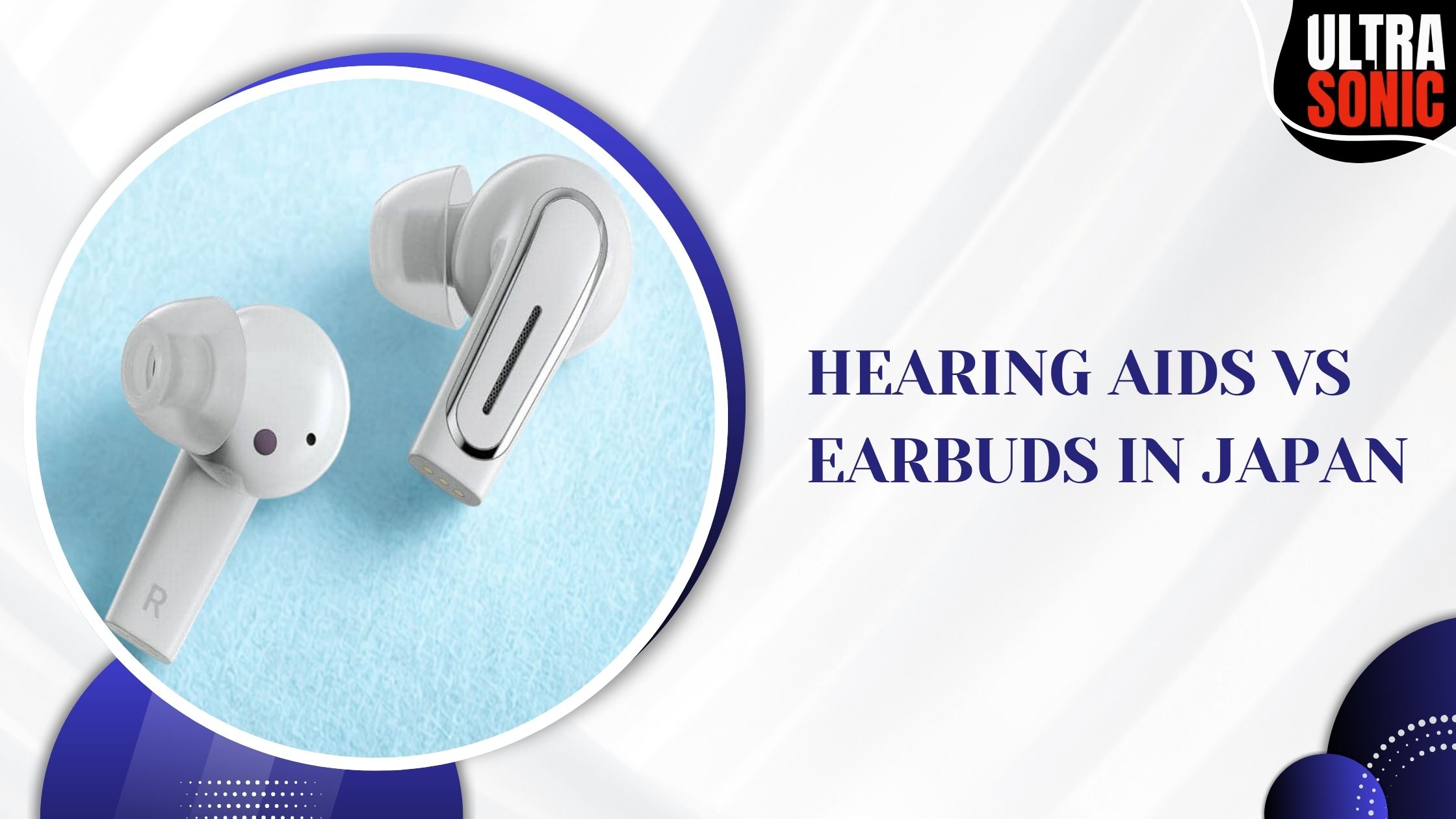
Hearing Aids vs Earbuds in Japan: Cost, Comfort & Regulations
Japan is known for its love of cutting-edge technology, from smartphones to wearable devices. As personal audio products evolve, many consumers are now asking whether everyday earbuds can replace hearing aids—especially as transparency and ambient modes become more advanced. But when it comes to hearing aids vs earbuds in Japan, the differences go far beyond convenience or style.
For anyone navigating hearing difficulty, understanding cost, comfort, and Japan’s strict medical regulations is essential. At Ultra Sonic, we aim to make hearing care clearer and more accessible. Here’s everything you need to know before choosing between hearing aids and earbuds in Japan.
1. Purpose: Why Hearing Aids and Earbuds Aren’t the Same
Hearing Aids: Medical Devices for Hearing Loss
Hearing aids are classified as medical devices in Japan. They are designed specifically to:
Improve speech clarity
Reduce background noise
Support mild to severe hearing loss
Protect the ear from unsafe volume levels
Japanese standards require hearing aids to meet strict performance and safety regulations before they can be sold.
Earbuds: Entertainment Devices for Everyday Audio
Earbuds—even those with transparency modes—are consumer electronics. They may help you hear surroundings more clearly, but they are not designed to compensate for hearing loss or support long-term hearing health.
Earbuds amplify sound, while hearing aids process sound to make it clearer and safer.
In short: Earbuds are for listening. Hearing aids are for hearing health.
2. Cost Comparison in Japan
The Cost of Hearing Aids in Japan
Hearing aids in Japan range widely depending on model, features, and brand.
Typical price ranges:
Entry-level: ¥50,000 – ¥120,000
Mid-tier: ¥120,000 – ¥250,000
Premium: ¥250,000 – ¥400,000+
Although this can be a significant investment, Japanese hearing aids often include:
Professional fitting
Follow-up adjustments
Warranty and maintenance
Medical-grade safety features
Some users may also qualify for Japanese public subsidies, especially those with officially diagnosed hearing loss.
The Cost of Earbuds in Japan
Earbuds range from ¥3,000 to ¥40,000+.
Popular features include:
Bluetooth connectivity
Noise cancellation
Ambient sound modes
High-quality audio
While earbuds are far cheaper upfront, they lack the medical-grade processing necessary for hearing support. Using them as “hearing helpers” can even risk worsening existing hearing issues due to excessive volume.
Cost vs Value
When analyzing hearing aids vs earbuds in Japan, cost alone doesn’t tell the full story. Hearing aids are an investment in long-term hearing health, while earbuds are designed for music and communication—not hearing improvement.
3. Comfort and Daily Use: What Japanese Consumers Prefer
Comfort of Hearing Aids
Modern hearing aids used in Japan are:
Lightweight
Breathable
Designed for all-day wear
Available in discreet styles
Japan’s aging population values comfort and reliability, especially since many seniors wear hearing aids for more than 10 hours a day.
Comfort of Earbuds
Earbuds are comfortable for short-term use but often cause:
Ear fatigue
Pressure buildup
Heat in the ear canal
Discomfort after long wear
Japanese users—especially older adults—frequently report that earbuds become uncomfortable during extended wear, making them unsuitable as hearing-support tools.
Design Preferences in Japan
Japanese consumers highly value subtle and stylish designs. While earbuds may appear more fashionable, hearing aids in Japan have become incredibly discreet, with models that are nearly invisible behind the ear.
4. Regulations for Hearing Aids vs Earbuds in Japan
Hearing Aid Regulations
Hearing aids are regulated by:
The Pharmaceuticals and Medical Devices Agency (PMDA)
Japan’s Ministry of Health, Labour and Welfare
Before a hearing aid can be sold in Japan, it must pass strict standards for:
Acoustic safety
Sound processing accuracy
Material and battery safety
Medical effectiveness
Most hearing aids are sold through licensed hearing-care specialists or clinics.
Earbuds Regulations
Earbuds are regulated as electronics, not medical devices.
This means:
No required medical testing
No mandatory safety limits on amplification
No guidelines related to hearing health
Because earbuds lack regulated safe-amplification standards, users who rely on them for hearing support may unintentionally damage their ears.
5. Performance in Real Japanese Environments
Japan’s sound environments—crowded trains, busy intersections, and lively restaurants—require smart, adaptive sound control.
Hearing Aids
Automatically adjust for noisy environments
Reduce background chatter
Focus on speech, even across tables
Prevent harmful noise spikes
Offer directional microphones for clarity
This is especially beneficial in Japanese workplaces and public spaces where conversation clarity is essential.
Earbuds
Ambient modes amplify everything
Struggle to isolate speech
Let in too much background noise
May distort sound in loud train stations or cafes
While earbuds perform well for music, they are not optimized for conversation accuracy.
6. Which Should You Choose in Japan?
Choose Earbuds If:
You want good-quality music
You need occasional ambient sound
You do not have noticeable hearing difficulty
Choose Hearing Aids If:
Voices sound muffled
You struggle in noisy Japanese environments
TV volume seems too low for you but too loud for others
You want medically safe amplification
You want devices approved under Japanese health regulations
If you experience even mild hearing challenges, hearing aids—not earbuds—are the safer, more effective choice.
7. Ultra Sonic’s Commitment to Hearing Innovation in Japan
At Ultra Sonic, we support Japanese consumers by offering cutting-edge, comfortable, and affordable hearing solutions. We believe everyone deserves access to safe, high-quality sound support—whether through advanced hearing aids or hybrid hearing technologies.
Our focus is on:
Comfort-first designs
Affordable yet powerful hearing solutions
Precision sound processing
Compliance with Japanese standards
Stylish, discreet options
We are committed to helping Japan hear better, live better, and stay connected.
Final Thoughts
When evaluating hearing aids vs earbuds in Japan, the choice comes down to purpose, safety, and long-term health. Earbuds are excellent entertainment devices, but they are not designed to improve or protect hearing. Hearing aids offer medically approved clarity, comfort, and protection tailored for the demanding sound environments of Japan.